Capacity
Many students can take an individual oral exam at the same time – in one room, with one supervisor.
For educators and institutions
Polibeli helps where take-home assignments no longer give enough certainty about independent knowledge, and there is not enough teaching time for traditional oral exams.
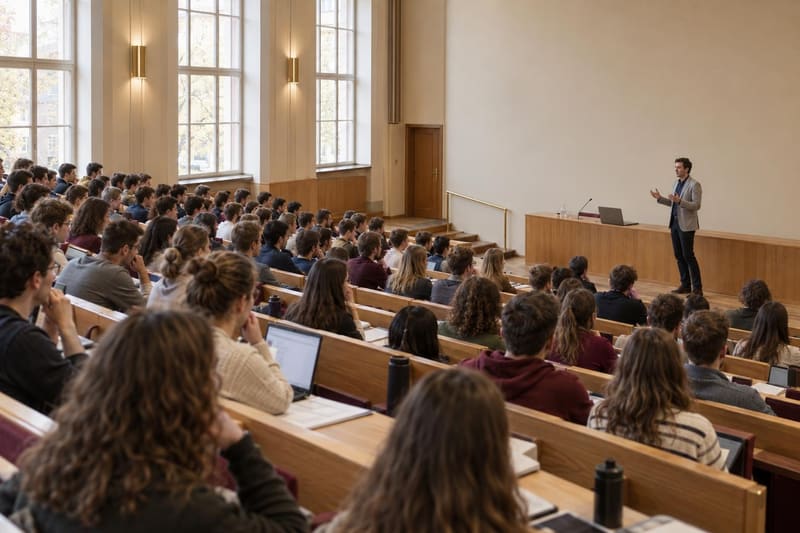
Many students can take an individual oral exam at the same time – in one room, with one supervisor.
Questions, answers and assessment rationale are retrievable. Teachers review documented material instead of reconstructing an answer from memory.
Based on pre-approved material and uniform requirements – the same yardstick for every student.
Oral exams for courses with hundreds of students, in several rounds, with one set of topics and requirements.
Shorter, regular oral checks during the term – where so far there was only capacity for written tests.
An oral assessment linked to the assignment’s subject: students show in their own words that they understand what they submitted.
Oral mock exams before school-leaving or final exams, with feedback per requirement.
An online walkthrough of the student, supervisor and teacher views.
Preparing topics, sources and weighted requirements, approved by teachers.
A mock exam with real equipment and 30–40 headsets.
Professional review of the analyses per subject, with the findings documented.
A joint evaluation and a decision on how to roll out.
Get in touch
Request a demo and let’s agree which subject could be the first stop of the pilot.
Request a pilot demo